5 DIY Strategies for Unclogging Your Kitchen Sink
Further Details
They are making several good points related to DIY Plumbing Fixes as a whole in this content beneath.
In this short article, we will certainly be taking a look at five straightforward actions you could take to release your kitchen area sink from obstructions and conserve you from the discomfort and also embarrassment of managing a clogged up kitchen area sink.
Obstructed kitchen sinks are one of one of the most usual drainage problems homeowners deal with. And also what's more, it's a unpleasant as well as really uncomfortable sight. Picture going to the sink to do your meals and also finding out that the drain is blocked as well as water can not move down easily.
Many stopped up drains are triggered by food particles, oil, fat, and soap particles. They clog the sink and make it hard for water to decrease the drain swiftly. While it is alluring to put a call through to the plumbers, there are a few DIY hacks you could try first before making that call.
1. Baking Soda as well as Vinegar
Rather than using any form of chemicals or bleach, this method is much safer as well as not dangerous to you or your sink. Sodium bicarbonate and also vinegar are day-to-day house products utilized for lots of other things, and they can do the trick to your kitchen sink.
Firstly, remove any kind of water that is left in the sink with a mug.
Then put a great amount of baking soda down the drain.
Pour in one mug of vinegar.
Seal the water drainage opening and also enable it to go for some minutes.
Pour warm water down the tubes to disappear other persistent deposit as well as particles.
Following this simple method can work, as well as you can have your kitchen sink back. Repeat the procedure as long as you consider necessary to clear the sink of this particles totally.
2. Try a Plunger
If the problem is not from the garbage disposal, you can try making use of a bettor. Plungers are standard house tools for this celebration, as well as they can come in helpful if you use them effectively. A flat-bottomed bettor is most suitable for this, but you can use what you have is a toilet bettor.
Comply with the list below straightforward steps to use the plunger effectively:
Secure the drain with a dustcloth as well as load the sink with some hot water
Place the bettor ready over the drain and start plunging
Check to see if the water runs easily after a few dives
Repeat the process till the drainage is free
3. Maybe it's the Garbage Disposal
In several situations, the clog might be due to a clog in the disposal. Usage pliers instead.
If this does not function, you can explore the complying with option to unblock your kitchen sink.
4. Utilize a Hanger
Using a wire fabric hanger or a plumber's snake if you have one can do the technique. All you need do is align the hanger to go down the drain while you carefully pick out the particles causing the blockage.
Run hot water down the drain after this to see how successful you were.
5. Usage Boiling Water
When confronted with a clogged up sink, the first thing you must attempt is to pour boiling water down the drain. That is about the most uncomplicated solution to stopped up sinks as well as drains. Boiling water helps reduce the effects of the particles and also particles triggering the blockage, especially if it's oil, oil, or soap bits, and oftentimes, it can flush it all down, and your sink will certainly be back to typical.
Due to the fact that warm water might melt the lines and also create more damage, do not attempt this method if you have plastic pipelines (PVC). If you make use of plastic pipes, you might wish to adhere to utilizing a bettor to get particles out.
Using this approach, turn on the tap to see exactly how water flows after pouring warm water down the tubes. Try the procedure again if the clog persists. The clog could be a lot more persistent in some situations and need even more than just boiling water.
Final Words
Attempting these couple of tricks might conserve you the expenditures of having a plumber check it. In several situations, a plumber is what we need. In cases where you locate it hard to unblock the sink even after trying all these methods, it might be time to leave it to the specialists.
Contact expert plumbing business to repair your drainage issues and also other different family plumbing requirements.
Obstructed kitchen area sinks are one of the most usual water drainage issues home owners face. Envision going to the sink to do your recipes and finding out that the drainpipe is obstructed and water can not flow down quickly.
They obstruct the sink as well as make it hard for water to go down the drain swiftly. When encountered with a clogged up sink, the very first point you should try is to pour boiling water down the drain. Boiling water assists reduce the effects of the fragments and also debris causing the obstruction, particularly if it's oil, oil, or soap bits, and also in several cases, it can purge it all down, and also your sink will certainly be back to normal.
How to Unclog a Kitchen Sink
Take the Plunge
Start your efforts by plunging. Use a plunger with a large rubber bell and a sturdy handle. Before getting to work on the drain, clamp the drain line to the dishwasher. If you don t close the line, plunging could force dirty water into the dishwasher.
Fill the sink with several inches of water. This ensures a good seal over the drain.
If you have a double sink, plug the other drain with a wet rag or strainer.
Insert the plunger at an angle, making sure water, not air, fills the bell.
Plunge forcefully several times. Pop off the plunger.
Repeat plunging and popping several times until the water drains.Clean the Trap
The P-trap is the curved pipe under the sink. The trap arm is the straight pipe that attaches to the P-trap and runs to the drain stub-out on the wall. Grease and debris can block this section of pipe. Here s how to unclog a kitchen sink by cleaning out the trap:
Remove as much standing water from the sink as possible.
Place a bucket under the pipe to catch the water as it drains.
Unscrew the slip nuts at both ends of the P-trap. Use slip-joint pliers and work carefully to avoid damaging the pipes or fasteners.
If you find a clog, remove it. Reassemble the trap.
If the P-trap isn t clogged, remove the trap arm and look for clogs there. Run the tip of a screwdriver into the drain stub-out to fetch nearby gunk.Spin the Auger
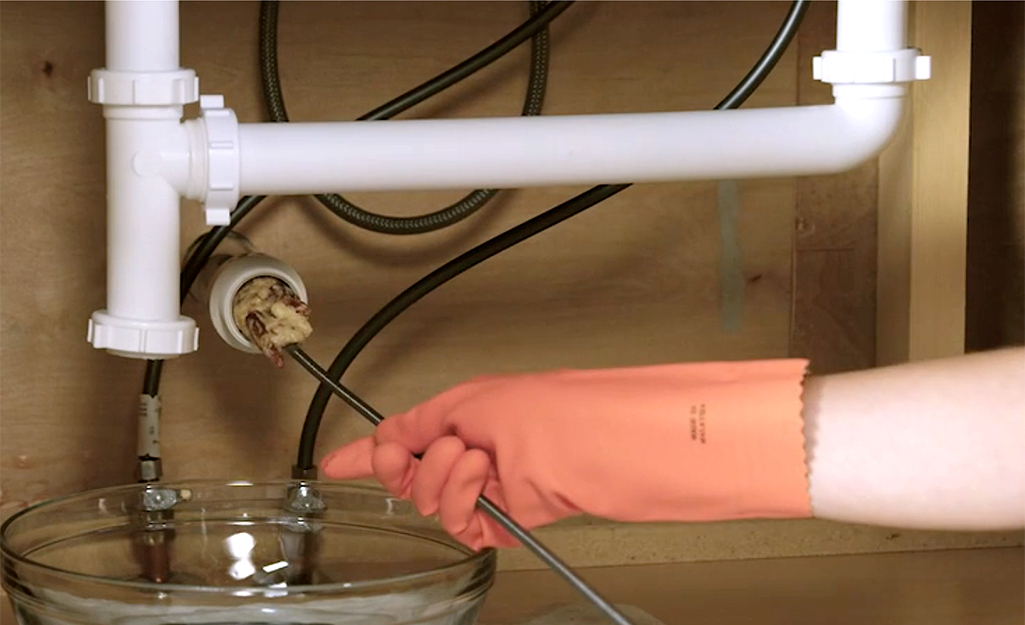
With the trap disassembled, you re ready to crank the auger down the drain line.
Pull a 12-inch length of cable from the auger and tighten the setscrew.
Insert the auger into the drain line, easing it into the pipe.
Feed the cable into the line until you feel an obstruction. Pull out more cable if you need to.
If you come to a clog, crank and push the cable until you feel it break through. The cable will lose tension when this happens.
Crank counterclockwise to pull out the cable, catching the grime and debris with a rag as the cable retracts.

Hopefully you liked our section on Repairing Common Household Plumbing Issues. Thank you for finding the time to read our content. Are you aware of somebody who is excited about the topic? Take a moment to share it. Thanks for your time. Come back soon.
Immediate attention? Call.